WHO WE ARE
Óscar Núñez del Prado Castro
Óscar Núñez del Prado Castro
Date of Birth: May 3, 1917 | Date of Death: October 18, 1991 | Nationality: Peruvian
WHO WE ARE
Óscar Núñez del Prado Castro
Óscar Núñez del Prado Castro
Date of Birth: May 3, 1917 | Date of Death: October 18, 1991 | Nationality: Peruvian
Profession: Anthropologist and Ethnologist
Specialization: Studies on Andean communities, cultural anthropology, and social reform in Peru.
Professional Profile
Óscar Núñez del Prado Castro was a prominent Peruvian anthropologist and ethnologist, a pioneer in the study of indigenous Andean communities.
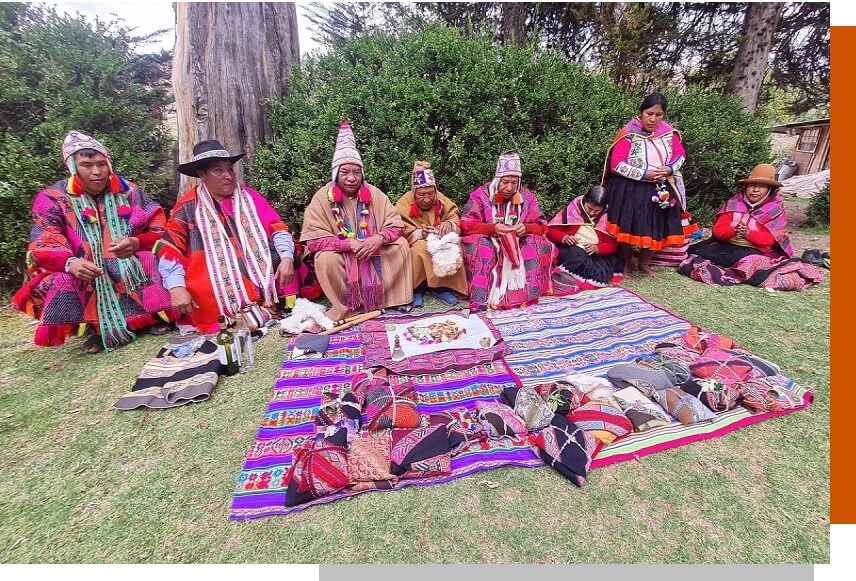
His academic and social legacy focuses on the exploration and documentation of the cultural traditions of the Q’ero community, as well as his contributions to social reform processes that benefited historically marginalized populations.
Recognized for both his rigorous field methodology and his social commitment, Núñez del Prado became an undisputed authority in Peruvian anthropology. His work on the myth of Inkarrí, his fight for the restitution of land to farming communities, and his role as a professor for more than three decades at the Universidad Nacional de San Antonio Abad del Cusco (UNSAAC) solidified his reputation as one of the most important scholars of the Andean world.
Academic Background
- Colegio Nacional de Ciencias y Artes del Cuzco
- Universidad Nacional de San Antonio Abad del Cusco (UNSAAC)
- Degree in Anthropology
- Over 30 years as a professor in the Faculty of Social Sciences
Notable Publications
- Medicina Popular (1943)
- Aspectos Económicos de Virú (1947)
- El Khipu Moderno (1950)
- El hombre y la familia, su matrimonio y organización político-social en Q’ero (1957, 1970)
- La escritura del quechua (1990)
- Un ensayo de integración de la población campesina: el caso de Kuyo Chico (1970)
Recognitions and Legacy
Núñez del Prado was an unrelenting advocate for the cultural and social recognition of Andean populations. His research remains a fundamental reference for contemporary anthropological studies. The Q’ero community and their Andean worldview are now recognized as cultural heritage thanks to his vision and commitment.
Key Achievements and Contributions
- Pioneering Research in the Q’ero Community (1955)
- Led the first scientific expedition to Q’ero, an isolated indigenous community considered a “last bastion of the Incas.”
- Documented the first academic version of the myth of Inkarrí, a cultural symbol of Andean resistance and spirituality.
- Commitment to Social Reform
- Championed the restitution of lands to the Q’ero community (1963) and Kuyo Chico (1965), preceding Peru’s agrarian reform of 1969.
- Identified and denounced the feudal exploitation conditions that affected indigenous Andean communities.
- High-Impact Academic Production
- Published fundamental works such as El hombre y la familia: su matrimonio y organización político-social en Q’ero (1970).
- Conducted research in ethnolinguistics, including proposals for the formal writing of Quechua.
- Teaching and Professional Training
- For over three decades, he trained generations of anthropologists at UNSAAC, leaving an unmatched academic and professional legacy.
Personal Information
- Spouse: Luisa Béjar, Peru’s first female anthropologist.
- Son: Juan Núñez del Prado Béjar, anthropologist and promoter of Andean traditions.