KAUSAY PURYI
What is Kausay Puryi
What is Kausay Puryi
Kausay Puryi is a Quechua phrase that can be translated as “Living in Fullness” or “Living Consciously in The World of Energy”. It’s a spiritual art system from the Andean regions that reminds people to live in harmony with nature, community, and the cosmos.
KAUSAY PURYI
What is Kausay Puryi
What is Kausay Puryi
Kausay Puryi is a Quechua phrase that can be translated as “Living in Fullness” or “Living Consciously in The World of Energy”. It’s a spiritual art system from the Andean regions that reminds people to live in harmony with nature, community, and the cosmos.
Kausay Puryi
it’s a way of life, teaching how to align your energy, actions, and intentions with the rhythms of the Earth (Pachamama) and the universe.
History
At the same time that the Sumerian civilization arose, which is considered to be the first civilization in history, another civilization flourished in the southern part of the continent that was later called America.
Caral. Peru, probably 3500 BC, although this civilization is placed even earlier, from researches that are increasingly coming to light. The Caral civilization flourished in the valley of three rivers, creating important monuments.
It spread to the north and to the south, to a great extent, and today we know that within it was created a knowledge that until recent years remained unknown, especially in the West, as no one knew about it, so could not search it.
- It was only in 1950 when the anthropologist Oscar Nunez del Prado in an expedition to the isolated regions of the Q’ero nations recognized in the clothes of the people the patterns of the Incas. Following them, he also recognized living customs, and then the whole treasure of this ancient tradition, which has remained alive all these years.
The spiritual heritage of the Andean peoples was a series of practices that were never written down on paper, and for that it was left to the people of Peru to learn and save it intact.
900-250 BC. Historically followed by the Chavin civilizations, 800-200 BC the Paracas civilization, 200-800 BC the Nazca civilization, 100-700 the Moche civilization, 600-1000 the strong Wari and Tiwanaku civilizations, 1438-1533 rising of the Tawantinsuyu or Empire of the Incas, built around the kingdom of Cuzco.
The knowledge of the spiritual tradition of the Andean peoples passed through all these intermediate historical stages, to finally constitute the education system of the Inca successors, but also the social constitution for the entire empire.
- The Inca is the emperor of a very large empire, and for this reason the education received by all the successors of the 12 royal families was a particularly important factor. This education aimed to bring forth the supreme ruler – who possessed eminent power.
The Inca empire was extended to an area larger than that of the Roman empire, and indeed had to face a strong challenge: the impassable Andes mountain range. It functioned by accepting the civilizations that entered it after expansionary actions, without creating the framework of writing, mathematics, or the art of war and weapon-making. Despite the extent of the empire, the social structured based on the Kausay Puryi teaching – contributed to the absence of poverty either on a small or on a large scale.
The Teaching of Kausay Puryi
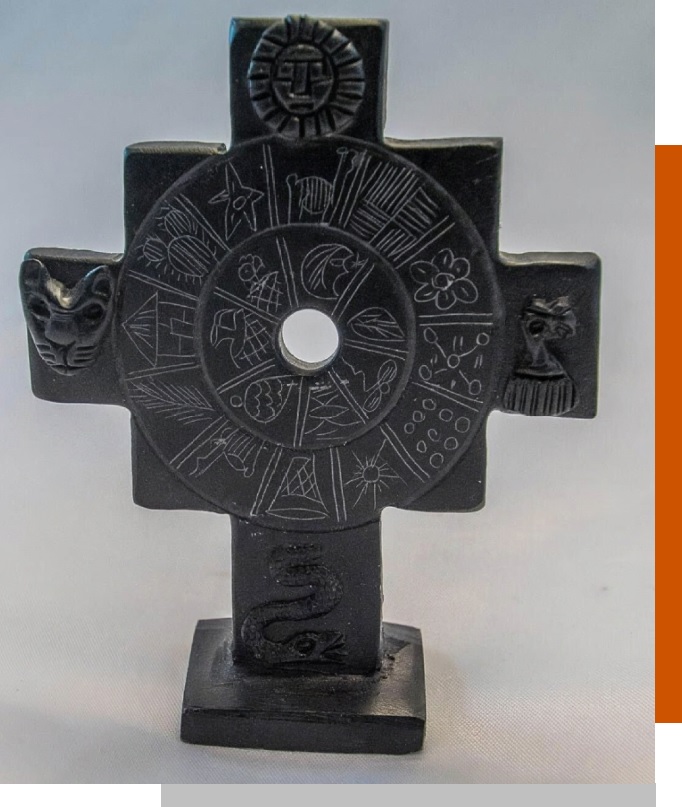
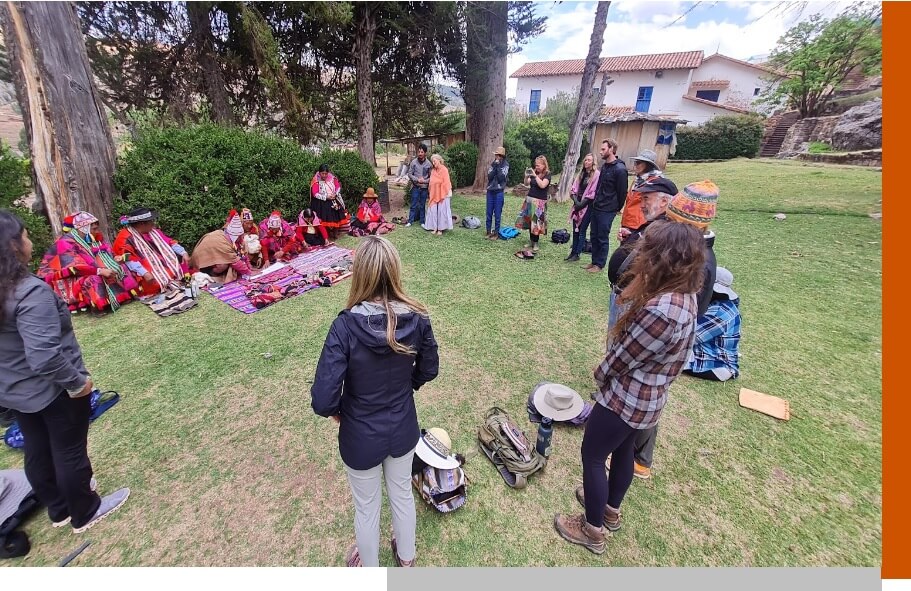
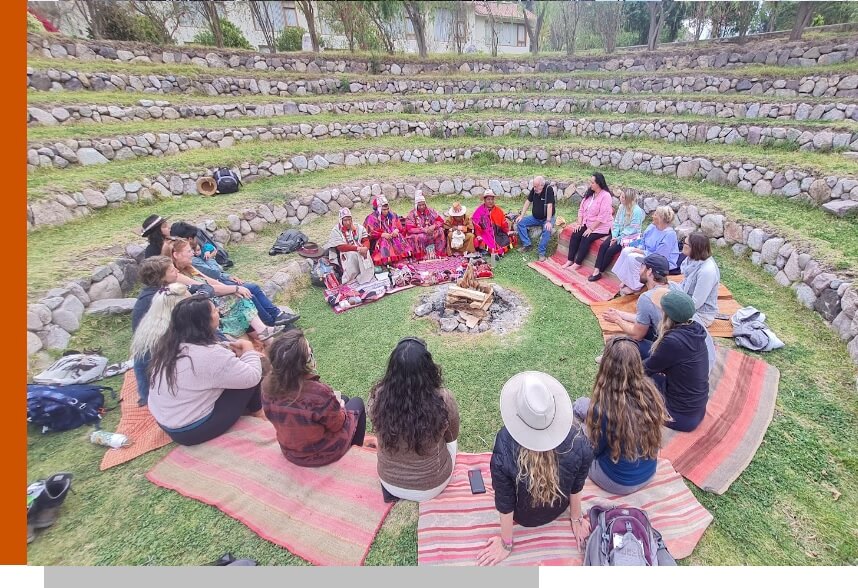
Kausay Puryi in the indigenous Quechua language means “walking in the living world” consciously. The teaching shows us that our world’s raw material is vital energy. Thus, it is alive. And that’s how you can contact it.
This, beyond a theoretical approach, in the hands of the Incas became practical knowledge, since hard nature became a tool; not an obstacle, when the megalithic monuments, such as that of Machu Picchu were built. In the same practical and tangible way, Kausay Puryi demonstrates factors such as the “Inca potential” within each human being (Inka muju), or the ability to manage energy and guide it, to benefit from it when it flows (sami) and to set it in a flow when it is stagnant and leads to excess weight (jucha).
The Kausay Puryi, although not a religion in the sense of the structured doctrine we know today, nevertheless spoke of the one god before the Quechua even came into contact with the Western conquerors. In this way, the spiritual path of Kausay Puryi – as an authentic spiritual art – has answers to all the great questions that have always concerned man: Genesis, soul, birth, death, journey after death, love, abundance, man, God, creation, power. And all this through the self-evident and self-existent ability of man to guide energy.
Kausay Puryi recognizes seven levels of consciousness in man, which each one has the ability to express as long as he decides to do so. As a whole our society today has one mission: to enter the fourth level, leaving behind the egocentricity and strife of the third level.
• The ability to express the seven levels of consciousness by climbing the Ladder of Seven Paths ( Qanchis Pata Nan ), means that he will gradually acquire the corresponding power or influence on a wider scale. The three levels humanity is expected to reach, based on the Prophecy, are the 5th ( the ultimate healer), the 6th ( the fully enlightened) and the 7th ( the incarnate god).
Basic assumptions of Kauysay Puryi
Kausay Puryi sees life as a living field of energy. Within each being lies a sacred seed, waiting to awaken through balance and reciprocity. Walking this path means living in relationship with nature, the visible and invisible worlds, guided by ayni, the law of sacred exchange.
- Kausa is the raw material for everything existing in the world (vital energy). As a result of this admission, everything is alive.
- A consequence of the principle that everything is composed of vital energy, is that the separation of good from evil is not followed, intead, of the opposite from the opposite, the lighter from the heavier, or from that which is in flux from that which is stagnant ( sami / jucha ).
- The height of potential for each person is “registered” inside his body, which is likened to a seed. This factor awaits its awakening and activation ( Inka muju – the seed of the Inca).
- Every creature emits energy and around it is the spectrum of its energy, simulated as a bubble ( poqpo ). Through it he experiences the energy, receiving and emitting. And indeed, inside this bubble there is the epxression of all three worlds (higher fields – hanaq pacha, the world of our experience – kay pacha, the “lower” or inner world – uju pacha ).
- The principle of interaction in life is of the greatest importance, since it is traditionally taught by God himself. It is the principle of reciprocity ( ayni ). One can see in the Q’ero communities people operating in their daily lives based on the ayni, even when the soil is cultivated.
- “Whenever there is an appearance of Wiraqocha in the world, he always has one thing to say: Ayni Nakuichis (To Practice tge Ayni ). Ayni is the only commandment – a god’s advice on how we should behave. When he reminds us to “practice the ayni “, he is essentially saying “to practice the principle of reciprocity”. Because everything can be seen as a payback. When you act on this principle, you can see how much better life becomes”
- A paqo (the man of tradition) never walks into the world of vital energy alone, since around him there is a life full of energy, and there are ways to communicate with everything. As are the apus (the Lords of nature) or the nustas (the Ladies of nature). In this way a paqo always finds helpers when he needs them.